
Hived's Impact Progress
Issue 157 l Eka’s Weekly Roundup (13 May 2026)

Scaling impact, almost 7m parcels later… 🗞️
Hived just released their 2025 Impact Report, and the data inside is good enough that we wanted to give it more than a single line!
The TLDR is that Hived now operate the UK’s first end-to-end electric parcel delivery network: final mile, middle mile, and as of this year, electric HGVs for trucking too.
They’ve moved 6.6 million+ parcels since launch, and avoided 337 tonnes of CO2e for their customers in the last 12 months alone. They’re also B Corp certified, SBTi-validated, and a founding steering member of the Sustainable Urban Freight Association.
Here’s what stood out.
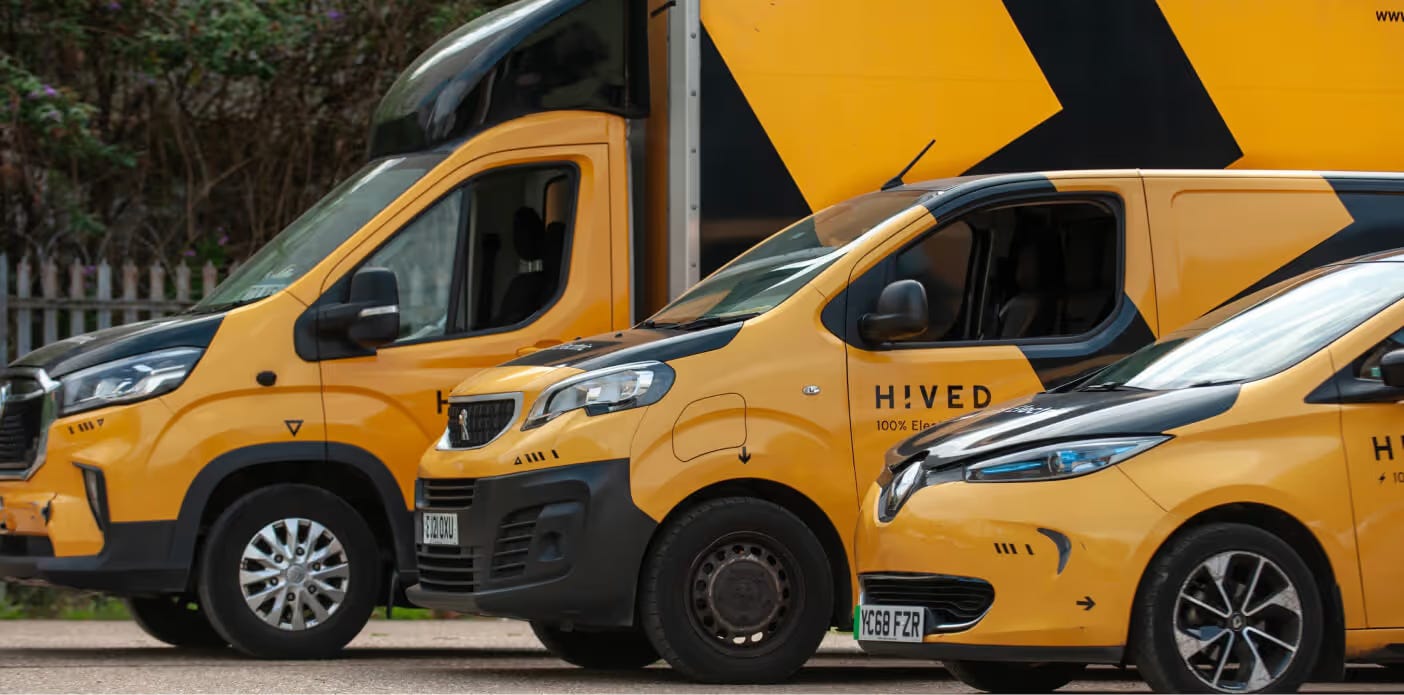
The macro: a sector that has to change, fast
Road transport is 26% of UK greenhouse gas emissions; UK parcel volumes grew 12% YoY to an estimated 4.6 billion parcels in 2024; and globally, final-mile delivery emissions are projected to rise 60% by 2030 without intervention.

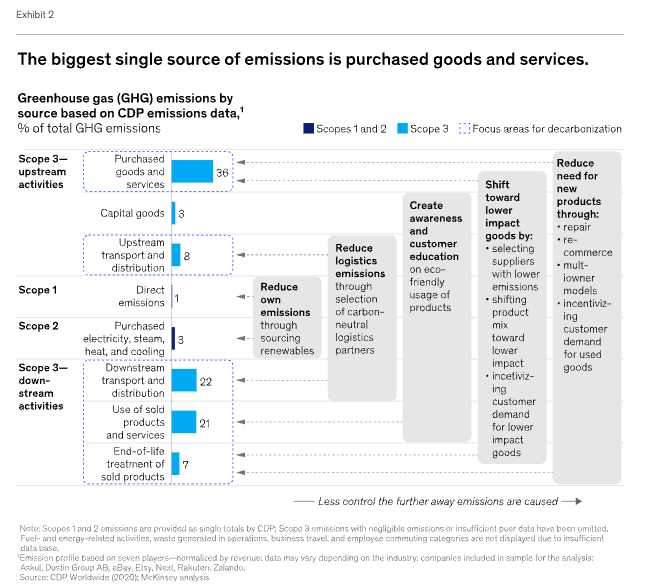
For e-commerce brands specifically, 22% of their carbon footprint sits in downstream transport and distribution. If you sell things online and you’re serious about a climate target, your choice of last-mile carrier is one of the single biggest levers you have. There aren’t many low-carbon options at scale. That’s the gap Hived is building into.
The carbon story: scale catching up to intensity
The headline carbon number is 337 tonnes of CO2e avoided for customers this year, up ~60% from 203 tonnes last year. That’s the figure Hived’s customers (Nespresso, Zara, H&M, John Lewis) get to report against their own Scope 3, i.e. every parcel routed via Hived rather than a diesel van.
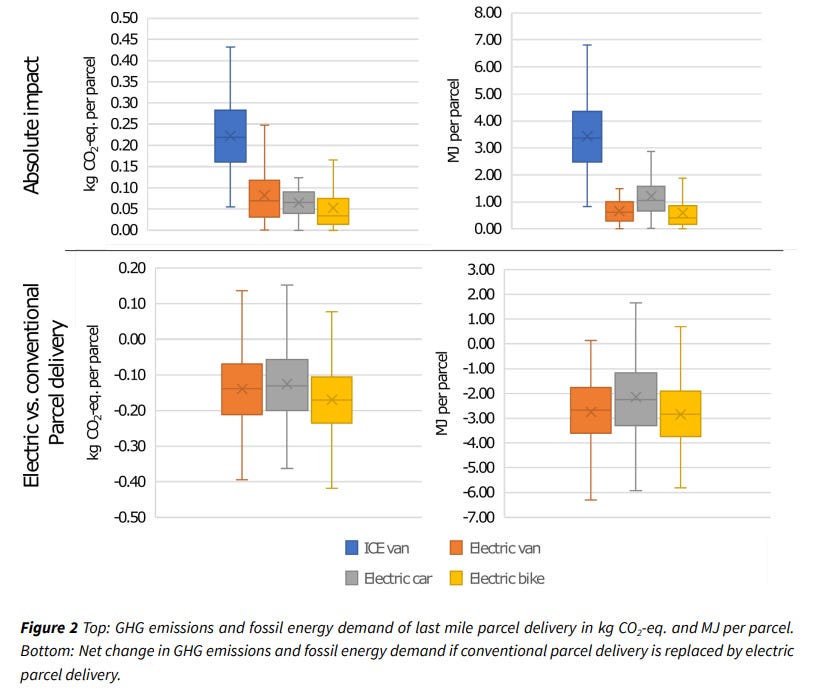
The underlying unit economics are even more interesting. Based on Hived’s full lifecycle analysis (commissioned independently, covering raw material extraction, manufacturing, electricity generation, vehicle use, and end-of-life), a parcel delivered by Hived emits up to 76% less CO2e than a diesel-delivered equivalent.
The unlock: electric HGVs
The middle mile, or moving parcels between depots in HGVs, has stayed diesel almost everywhere, because electric HGVs are expensive, rare, and depend on charging infrastructure that mostly doesn’t exist.
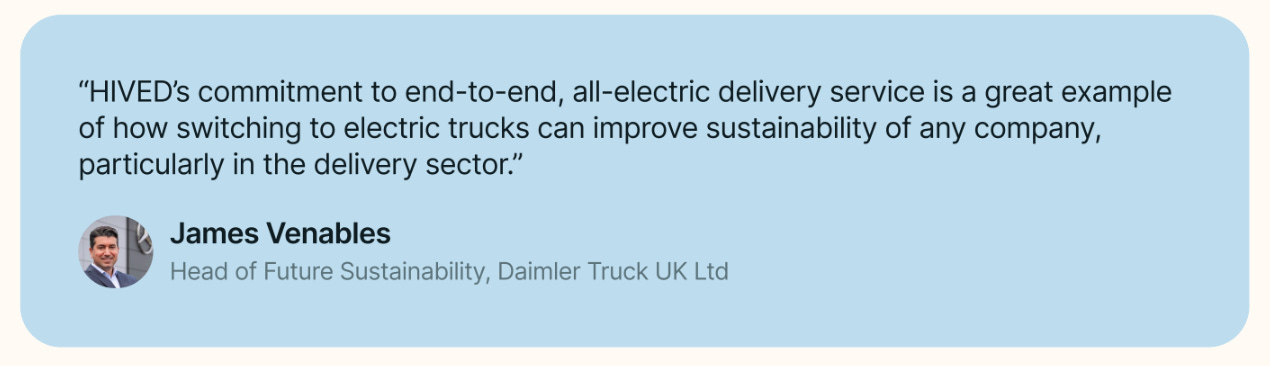
Hived now run two Mercedes eActros models (the 400 and the new 600), supported by dedicated eHGV fast chargers at their East London depot and a Midlands partner hub. As far as we know, they’re the only UK delivery company operating a fully electric fleet end-to-end. As Daimler Truck put it in the report:
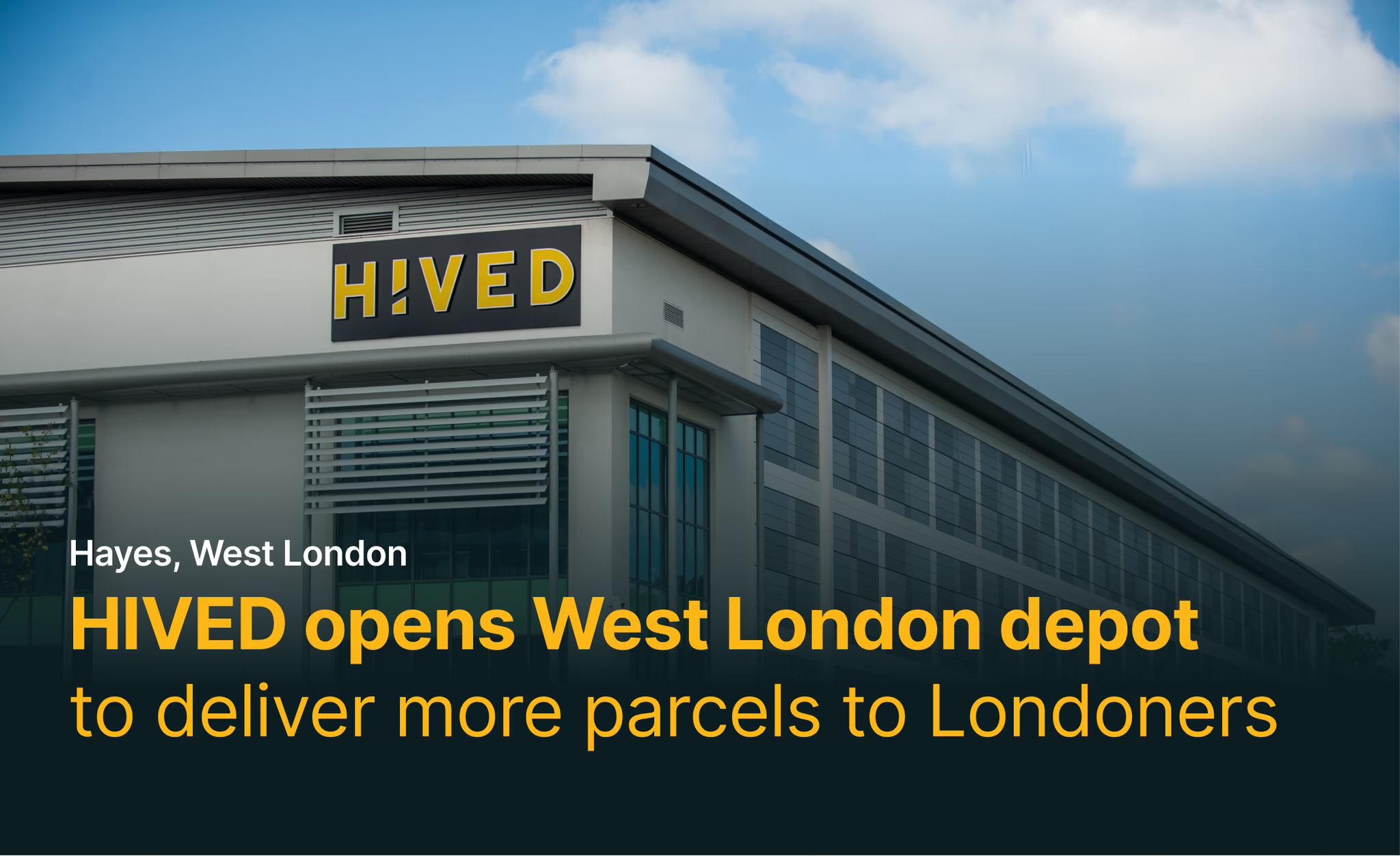
The new West London depot (opened April 2025) is the other big unlock: 240 solar panels already on the roof, power capacity sized for future rapid chargers, and a 12% increase in parcels per route (vs an 8% target).
The stack: last mile, middle mile, and now opening the doors
Worth zooming out on the product arc for a second, because it tells you a lot about where Hived sit strategically.
Phase 1: final mile, enterprise. Hived launched delivering parcels for the biggest names in UK retail: Nespresso, Zara, H&M, John Lewis. Enterprise brands have the volume to make green logistics commercially viable, and the most consumer and regulatory pressure to clean up Scope 3. Classic land-and-expand.
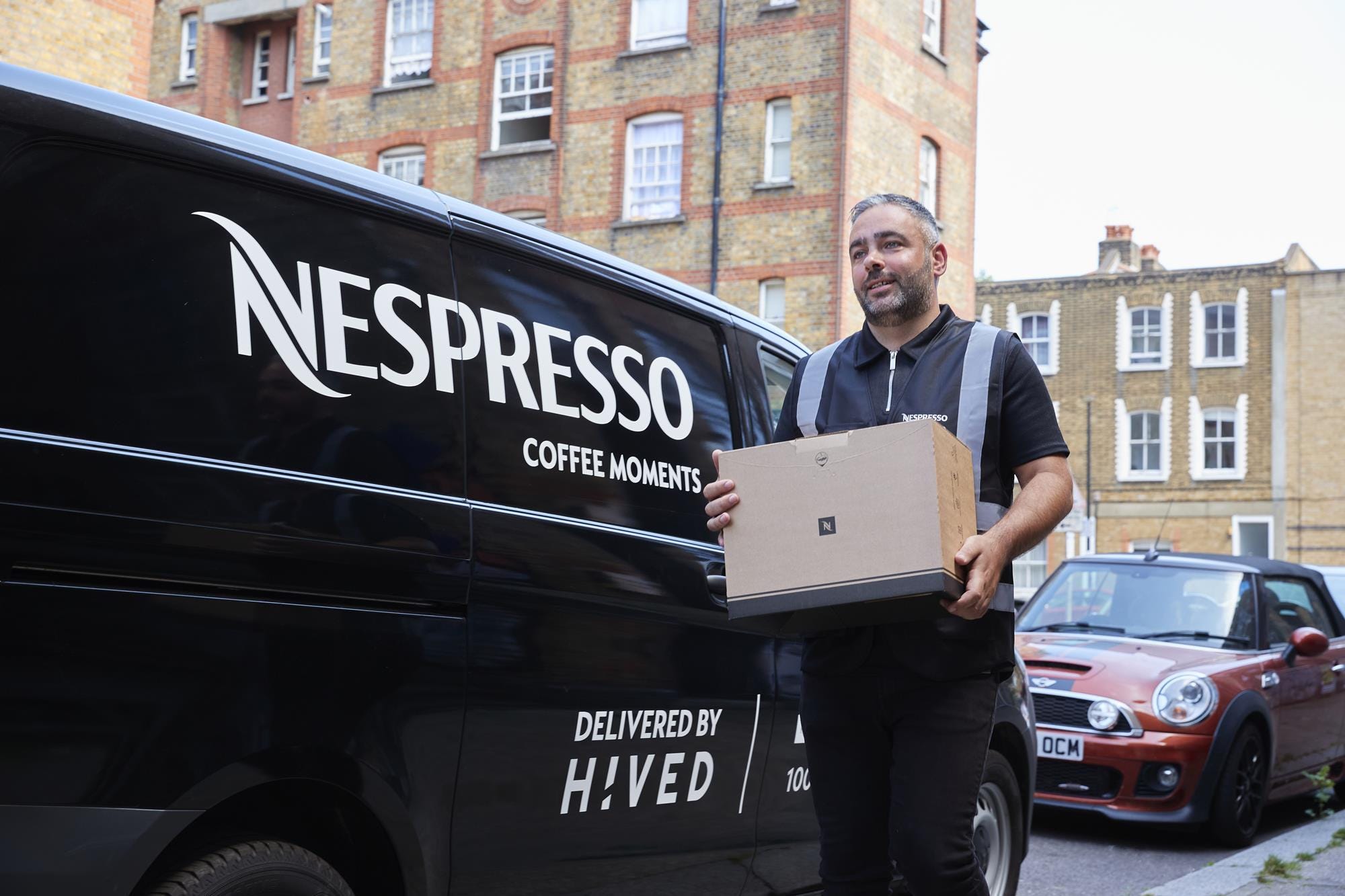
Phase 2: middle mile and haulage. This year’s eHGV rollout closed the diesel gap in Hived’s own network. Trunking, or moving parcels between brand warehouses and depots, had been the last non-electric leg, and now isn’t. Hived now own the entire physical journey of a parcel end to end, with zero tailpipe emissions across the chain. We don’t think there’s another UK carrier that can say that. They’ve also opened this haulage capacity up to the wider industry as HIVED Freight.
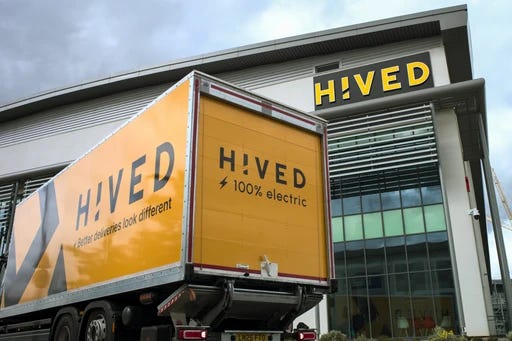
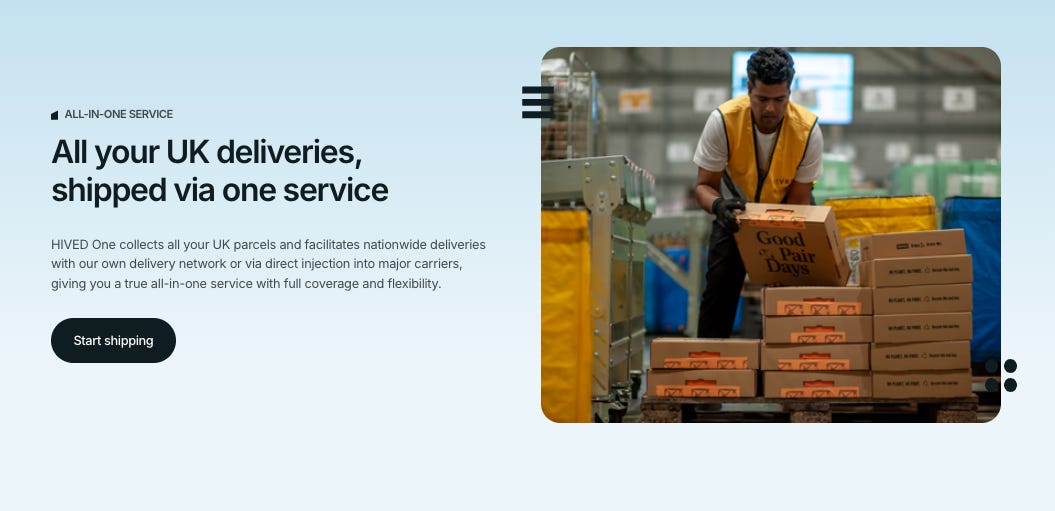
Phase 3: HIVED One. The standout move this year is HIVED One: opening up the network to growing ecommerce brands and SMEs, a segment that’s historically had no realistic low-carbon delivery option. Enterprise carriers won’t quote them; specialist green couriers don’t have the geographic coverage. HIVED One solves it by having one collection visit consolidating an SME’s entire UK parcel volume, deliveries flow through Hived’s electric network where it covers and via direct injection into major carriers where it doesn’t, all managed through a single dashboard, with no minimum volume thresholds. Early customer wins are strong: Minor Figures cut delivery failures by 87% after switching, and Grubby scaled their delivery network on the back of it. From a decarbonisation perspective this is potentially the biggest unlock of all: SMEs are a huge slice of UK e-commerce volume, and almost none of it is currently moving green.
Beyond carbon: the under-told story
A few wins that don’t fit the standard “we offset X tonnes” template but are arguably more interesting:
Tyre particulates. Hived ran a Phase 1 trial with The Tyre Collective, fitting prototype devices to vans to capture tyre wear at source. Results: 190,978 m³ of air pollution prevented and 290–579mg of 6PPD captured: enough to protect 3.8 to 7.6 million litres of water (roughly 1.5 to 3 Olympic-sized swimming pools) from reaching toxic levels. As EVs scale, tyre particulates are projected to overtake tailpipe as the dominant transport emission. Hived are already getting ahead of it.
Reusable packaging. An independent LCA, completed as the final phase of Hived’s Elemental Accelerator project, showed up to 960g of CO2e avoided per use vs single-use alternatives. Hived now have the data to make this a commercial offer to retailers, not a nice-to-have.
Reverse logistics. A Waste Carrier License plus a Nespresso partnership means Hived have collected 14,095 bags / 28,700 kg of used coffee pods for recycling. Last-mile networks running in reverse is a structural advantage that traditional carriers don’t have.
London air quality. 1,181 tonnes of CO2 and 3,000kg of NOx prevented from being emitted into London’s air this year through Hived’s electric vans alone.
The people: B Corp, SBTi, and the workforce
Hived hit 120 FTEs in July 2025, having doubled the team in three years. 31% female FTEs (up from 27%), 52% from minority groups, and, the one we’d really highlight, 21% of full-time employees started as drivers or sortation handlers.
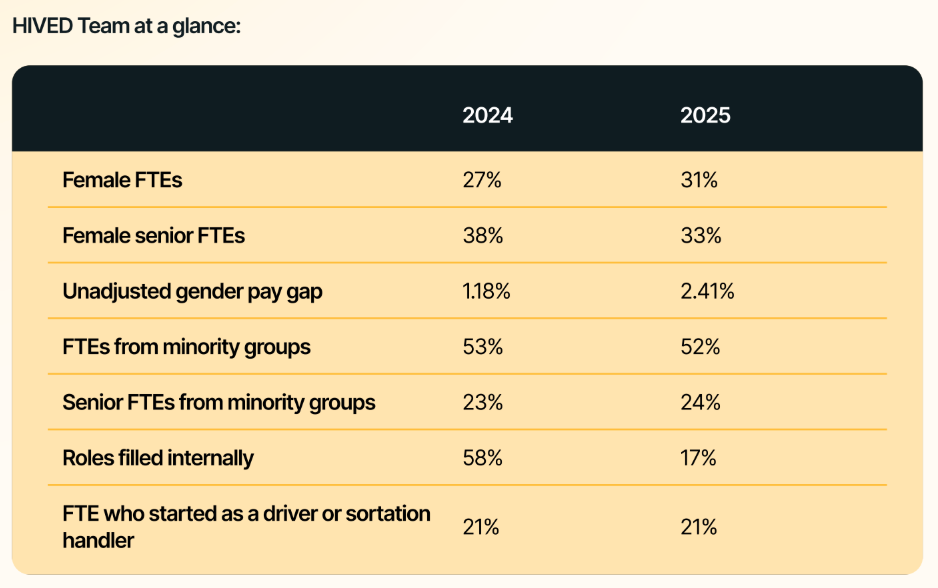
On governance: B Corp certification (rare among UK logistics businesses), an SBTi-validated Corporate Net-Zero commitment (42% Scope 1+2 reduction by 2030, net zero by 2050), and founding steering group membership of the Sustainable Urban Freight Association. Three different external accountability mechanisms, all pulling in the same direction.
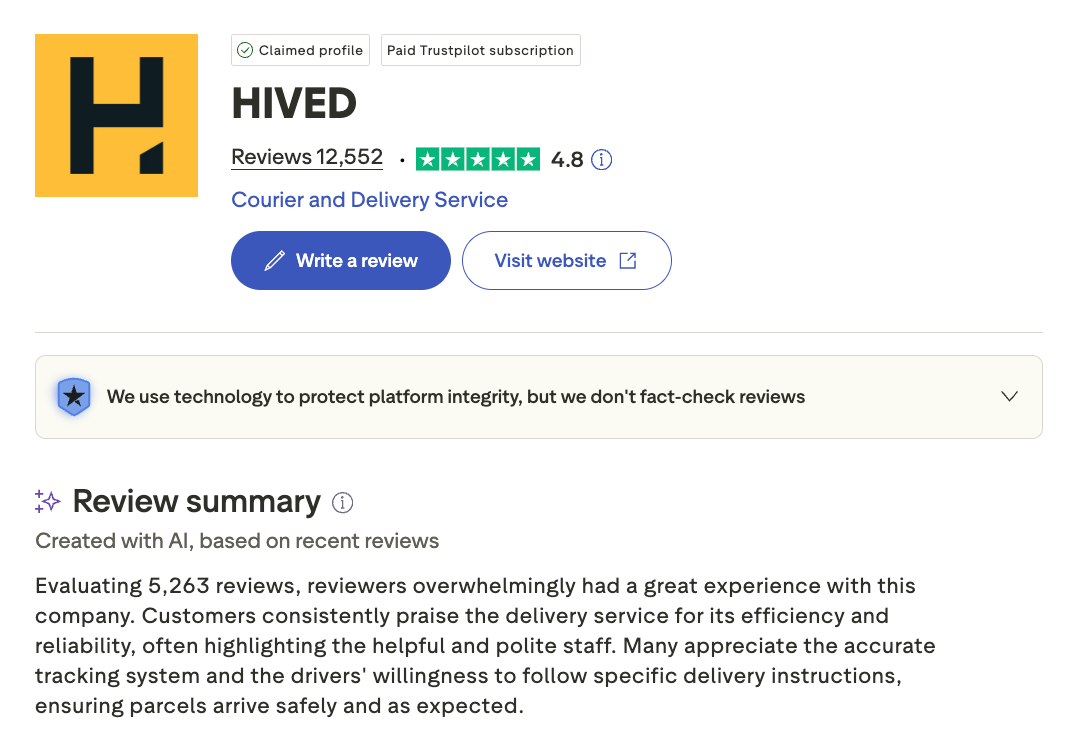
Hived maintained 4.8 Trustpilot score, 1-minute average live chat response time, and one customer case study (Good Pair Days, a fragile-goods wine subscription) reporting a 94% reduction in delivery tickets after switching to Hived. Better for the planet, better for the brand, better for the recipient.
Why we backed Hived
When Eka first backed Murvah and Mathias in 2021, their thesis was very clear: every vehicle in the fleet would be electric, and every decision in the operation would be driven by data.
The diagnosis at the time was clear. The UK parcel delivery market was ~£13.5bn and growing fast, but dominated by five carriers (Royal Mail, Amazon Logistics, Hermes/Evri, UPS, DHL) accounting for ~75% of volume.
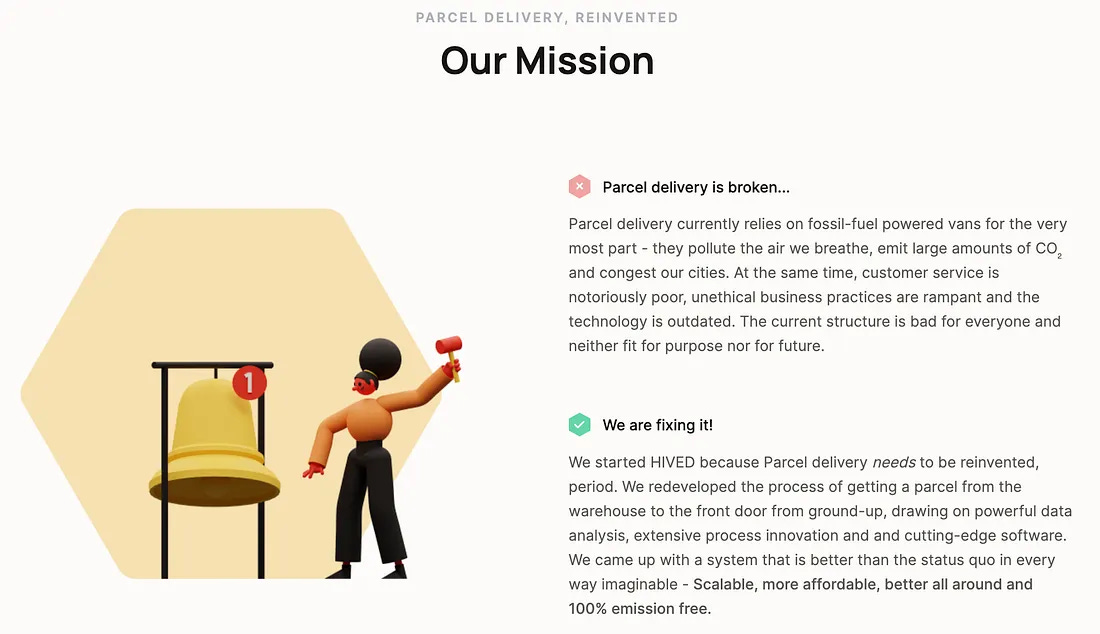
The recipient experience was poor: generic SMS notifications, weird slips through doors, no consistency from brand to brand. The environmental footprint was terrible (92% of DPD’s emissions came from delivery vehicles alone). And there was almost zero model innovation; nobody was rebuilding from the ground up.
What Murvah and Mathias proposed was a “Shared Value” model: better for the consumer, better for the brand, competitive on price, and zero tailpipe emissions — all four at once, only achievable if you designed the network from a blank sheet of paper.
Hived is also a textbook proof point for the Fund I and II thesis we’ve talked about in every conversation since: end-to-end platforms rebuilding legacy, regulated sectors, where being climate-aligned is a structural advantage rather than a cost.
Final-mile electrification is one of the rare wedges where the regulator, the consumer, the brand, and the unit economics all pull in the same direction. We feel very lucky and privileged to have backed the team building it first in the UK.
You can read the story of why we backed Hived here.